
Huun-Huur-Tu in Wrocław: throat singing from Tuva and music rooted in tradition
After last year's highly successful concert, the band who made throat singing famous worldwide return to Wrocław! Huun-Hurr-Tuu, stars of the world's leading festivals, will appear on 24 April in Stary Klasztor's Gothic Hall as part of Ethno Jazz Festival, celebrating its 10th birthday in 2016.
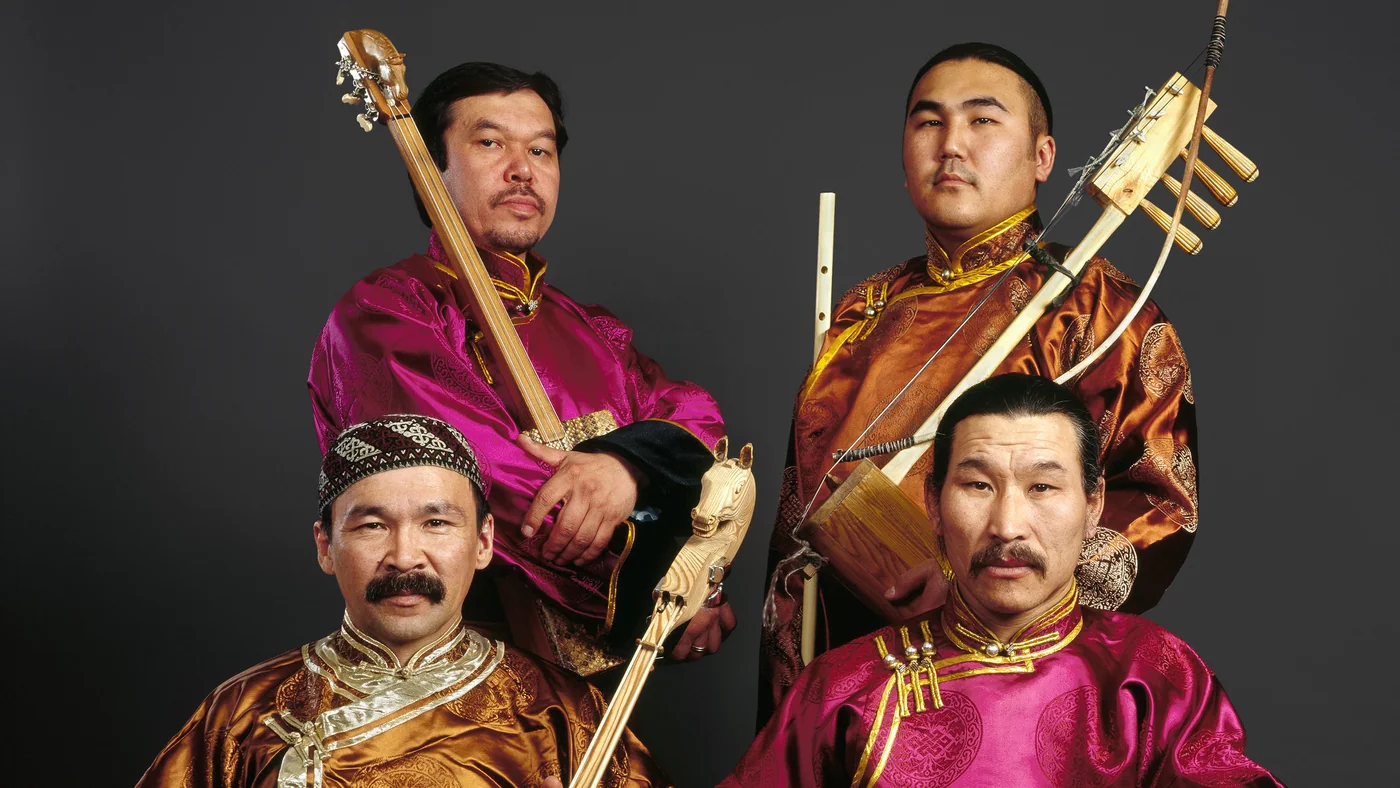
In 1992, Kaigal-ool Khovalyg, Alexander Bapa, Sayan Bapa and Albert Kuvezin decided to form the Kungurtuk quartet to present traditional Tuvan songs and music. It soon became clear, however, that the musicians went beyond tradition and frequently introduced innovations into the old music. Shortly afterwards, they changed their name to Huun-Huur-Tu. They are now Tuva’s best-known band worldwide. In 1993, Tuvan musicians, including Huun-Huur-Tuu members, travelled to the United States and took part in recordings by artists and groups such as Frank Zappa, Ry Cooder, the Chieftains and Kronos Quartet.
Since 1993, the band have toured extensively worldwide, and have 9 CDs to their name, alongside over a dozen recorded with other artists. As they say themselves, they feel a need not only to keep beautiful music alive, but also to introduce vital and interesting ideas into it. This happened in their collaboration with Bulgarian choir Angelite, where the Bulgarian women’s distinctive high voices were combined with throat singing.
Why is Tuvan music so popular in the West? Sayan Bapa was asked this several years ago. There is a kind of genuine feeling in Tuvan music that makes it seem accessible and honest, so everyone understands it […] Interest in our music has grown not only in the West; it is happening in Tuva too. People who have heard our records, whether they received them from us or from other musicians, respond very positively to what we do. Many young people heard these old songs from us for the first time, and we are proud to keep the tradition alive and help shape it.
Respect for our ancestors is the key to our music, and we search for their voices in Tuva. I have read that, in earlier times, men met and played together as we do. There was a tradition of everyone playing a melody in their own way. We do not know how that music sounded, so we do it our own way, based on our knowledge of traditional material and a traditional approach to making music. We try to return to older, slower rhythms… Faster rhythms are more characteristic of contemporary music.
We try to create accompaniment that emphasises our songs’ spiritual aspect. At the same time, we do not feel bound by tradition. For example, our frame drum was used as a shamanic instrument, not to accompany lyrical songs. We added it because, like our voices and instruments, it creates rich harmonics, with its own melodies and rhythms. Rattles made from bulls’ testicles and sheep bones are not traditional instruments either. People used bulls’ testicles as salt containers. And, of course, the guitar is not a Tuvan instrument.
“After an era of song-and-dance ensembles familiar in that region too, this band seeks to play traditional folk music in new circumstances, believing that ‘a musical tradition that does not evolve is doomed to die’ (from the album notes). One could write endlessly about polyphonic overtone singing. Have you ever heard something resembling several low-flying bombers accompanied by a high, piercing male vocalisation?” (Dorota Samociuk, Marcin Skrzypek, Gadki z Chatki).
“Kaigal-ool Khovalyg and Anatoli Kuular […] were Siberian shepherds for many years, and music accompanied every aspect of their lives. Their astonishingly resonant, low, throaty voices are the main attraction of this record. A large drum marks the rhythm, accompanied by folk string and percussion instruments, and that quintessentially Russian instrument, the guitar. Apparently, no studio recording can come close to capturing the magic of a Huun-Huur-Tu concert. […]” (Olaf Szewczyk, Gazeta Wyborcza)
Huun-Huur-Tuu perform in the following line-up: – Kaigal-ool Khovalyg Vocals (Khöömei, Sygyt, Kargyraa), – Igyl Radik Tyulyush Vocals (Barbang-Nadyr),Byzaanchi, Khomuz (jew's harp) – Alexei Saryglar Vocals (Sygyt),Tuyug (horse hooves),Tungur (shaman-drum), – Igyl Sayan Bapa Vocals (Kargyraa & Khöömei), Toschpulur, (Guitar)
Event details
HUUN-HUUR-TU
24 April 2016
Gothic Hall
Wrocław