
Urna and Kroke at the synagogue: Chahar-Tugchi’s Mongolian voice and a Polish world music band
Urna Chahar-Tugchi and Kroke connect a Mongolian voice with a Polish approach to world music. The World Music concert preview at the White Stork Synagogue explored the artists’ longstanding encounters and shared compositions on “URNA Portrait”.

An extraordinary musical encounter between one of Asia's finest singers, Urna Chahar-Tugchi, and the internationally renowned Polish band Kroke. The concert will take place in Wrocław on 26 February 2013 as part of the World Music at the White Stork Synagogue series.
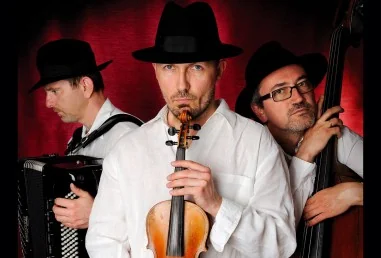
Kroke need no introduction to Polish audiences. Over 20 years, they have received numerous prestigious awards and honours, including the German Record Critics’ Award. Their albums have reached the upper ranks of the World Music Charts, and they have performed at major European festivals. They have collaborated with figures including Steven Spielberg, Peter Gabriel, Nigel Kennedy and URNA, and in Poland with Krzysztof Herdzin, Edyta Geppert, Anna Maria Jopek and Maja Sikorowska.
The latest album, “Feelharmony”, was released for the group’s 20th anniversary in 2012.
Sinfonietta Cracovia and guests Anna Maria Jopek and Sławomir Berny participated in recording the new material. The album features familiar band pieces specially arranged for a large orchestra by Krzysztof Herdzin, the outstanding composer, arranger, conductor and jazz pianist.
URNA CHAHAR-TUGCHI
“Her voice reminds me of rustling wind, the cold boldness of stones and the sun's burning heat; at once a waterfall's splash and a butterfly's delicate flutter. That is when you understand why critics and audiences say Urna's voice is like a great orchestra.”
That is precisely what the German critic felt when he first heard Urna Chahar-Tugchi.
Others describe Urna's singing as resembling the experience of a religious ceremony, although her music does not necessarily concern religion. Urna says: “I interpret my songs with all my strength and the diversity of my life experiences, which is why I feel reborn after every performance.”
Urna Chahar-Tugchi was born into a herding family on the grasslands of Ordos in Inner Mongolia. Today, she is considered one of Asia’s most outstanding singers. Her music nurtures the traditions and spirit of her homeland, conveying them to audiences worldwide. She developed her musical talent and techniques while learning the yangqin hammered dulcimer. After her studies, at eighteen, she decided to leave Mongolia and attend the Shanghai Conservatory of Music. This transformed her life and career. She chose to become a singer, leaving the dulcimer behind and concentrating on the astonishing range of colours in her four-octave voice.
Alongside her extraordinary voice, Urna possesses a genuine ability to communicate with audiences through music, crossing linguistic and cultural barriers with her dynamic, soaring singing. Most of her songs evoke Mongolia’s vast steppes and describe Mongolian ways of life. Rooted in her homeland’s traditional music, she continually moves beyond convention in new directions. Her latest compositions emphasise free improvisation, inspired by recent encounters with other cultures, musicians and life outside Mongolia.
Urna has performed with many internationally renowned musicians, including Hungarian violinist Zoltan Lantos, Kroke, India's Ramesh Shotham, Burintegus (Zhang Quansheng) from Inner Mongolia, who plays the traditional Mongolian morin huur, Chinese sheng soloist Wu Wei, Muhammad Reza Mortazawi, Saam Schlamminger from Central Asia, and many other folk and jazz musicians playing world music.
For ten years, Urna had invited Jerzy Bawoł, Kroke's accordionist, to concerts in Asia and Europe with her multinational project URNA & Friends. They also performed in Warsaw at Polish Radio's NOWA TRADYCJA festival.
The artists also met repeatedly at different festivals, performing their separate concerts on the same stages. Gradually, the idea grew of bringing their very different musical worlds together.
At URNA's invitation, they performed in the summer of 2011 with two Kroke musicians, Jerzy Bawoł and Tomasz Kukurba, and double bassist Tomasz Kupiec at a festival in Taj Pei, Taiwan. In December that year, the artist recorded three of her compositions with the full Kroke line-up. These appeared on URNA's latest album, Portrait – Heavetly Bird, released by Network Medien in 2012.
In summer and autumn 2012, now officially as URNA & Kroke, they performed at the prestigious Schlezwig–Holstein Musik Festival and in Leipzig, Dresden and Berlin, receiving an enthusiastic response from demanding German audiences.
Event details
URNA & KROKE
25 February 2013
White Stork Synagogue
Wrocław
Dane z dawnej strony LIONSTAGE.
Wiadomości