
Tashi Lhunpo monks at the synagogue: Tibetan mantras, sacred music and masked dances
Monks from Tashi Lhunpo present “The Power of Compassion – Sacred Dance and Chant” in the White Stork Synagogue announcement. Tibetan mantras, masks, traditional instruments and introductions to each dance explore the sacred tradition of the monastery re-established in India.
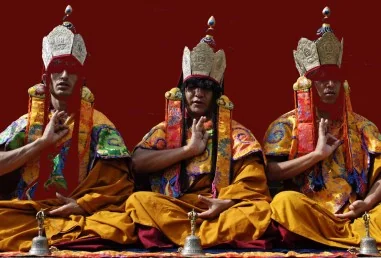
Tibet's sacred world is filled with sung Buddhist texts, recited mantras, ringing bells and cymbals, blown trumpets and beating drums. On 23 March at the White Stork Synagogue, Tibetan monks will present a programme of dance and music illustrating this astonishing culture's full breadth and diversity.
The concert venue is no coincidence: the spiritual leader of Tibetans, the XIV Dalai Lama, visited the White Stork Synagogue twice during his visits to Wrocław in 2008 and 2010.
Tashi Lhunpo Monastery in Tibet is one of the six largest monasteries of the Buddhist Gelug tradition, also known as Yellow Hat, founded by the first Dalai Lama in the 15th century. Its importance grew in 1642, when the fifth Dalai Lama conferred the title of Panchen Lama on its head. The Panchen Lama traditionally serves as the Dalai Lama's teacher and is regarded as Tibet's highest spiritual leader after the Dalai Lama.
In 1972, the monastery was re-established in India by twenty senior monks who had emigrated from Tibet with the Dalai Lama. Today it is home to around 250 monks of all ages. Tashi Lhunpo is an important centre of learning, known for its distinctive tradition of masked dances and sacred music.
The 90-minute programme begins with a blessing for long life: monks process carrying an image of His Holiness the Dalai Lama, accompanied by Dung’chen, a long horn comparable to the Polish highland trombita; Gyangling, an oboe; Damaru, a small hand-held drum; and Driblu, a bell. The “Stag and Buffalo” dance, with colourful masks, invokes protective deities’ spirits. Colour joins sound through the monks’ richly brocaded costumes as they sing Kunrik, the All-Knowing, a prayer to Buddha. During it, they use intricate gestures, mudras, each carrying particular spiritual meaning.
The “Dance of the Lords of the Dead”, performed in traditional masks to the sound of drums and cymbals, symbolises the Buddhist concept of impermanence: death is not seen as the end of life, but as the beginning of another stage of existence. In a lively demonstration of the “Art of Debate” (Taksel), the monks show how this practice promotes understanding of the philosophical nature of Buddhist concepts, using traditional gestures to emphasise their discussion of the nature of compassion.
The “Black Hat” dance originates in the story of the assassination of central Tibet's King Lang Darma (836–843), who began persecuting Buddhism. Wearing a black cloak with a white lining and riding a horse painted with charcoal, the monk Pelgye Dorjee concealed a bow and arrows in his sleeve and travelled to Lhasa to dance before the king.
Halfway through the dance, he drew his bow and shot the monarch through the heart. In the confusion, the assassin escaped unrecognised on horseback, swimming across the river, washing off the charcoal and reversing his cloak. The programme closes with a prayer for the environment, bodily and mental health, and the good of all, to achieve universal spiritual harmony.
The performances include an introduction to each dance.
Event details
Tibetan monks from Tashi Lhunpo Monastery
22 March 2013
White Stork Synagogue
Wrocław
Dane z dawnej strony LIONSTAGE.
Wiadomości