
Herbie Hancock at Centennial Hall: piano, jazz explorations and “The Imagine Project”
Herbie Hancock and “The Imagine Project” provide the focus of the Centennial Hall concert announcement. The pianist’s story runs from “Watermelon Man” and Miles Davis’s quintet through the funk of “Head Hunters” to the electronic “Rockit”, revealing his openness to new musical languages.
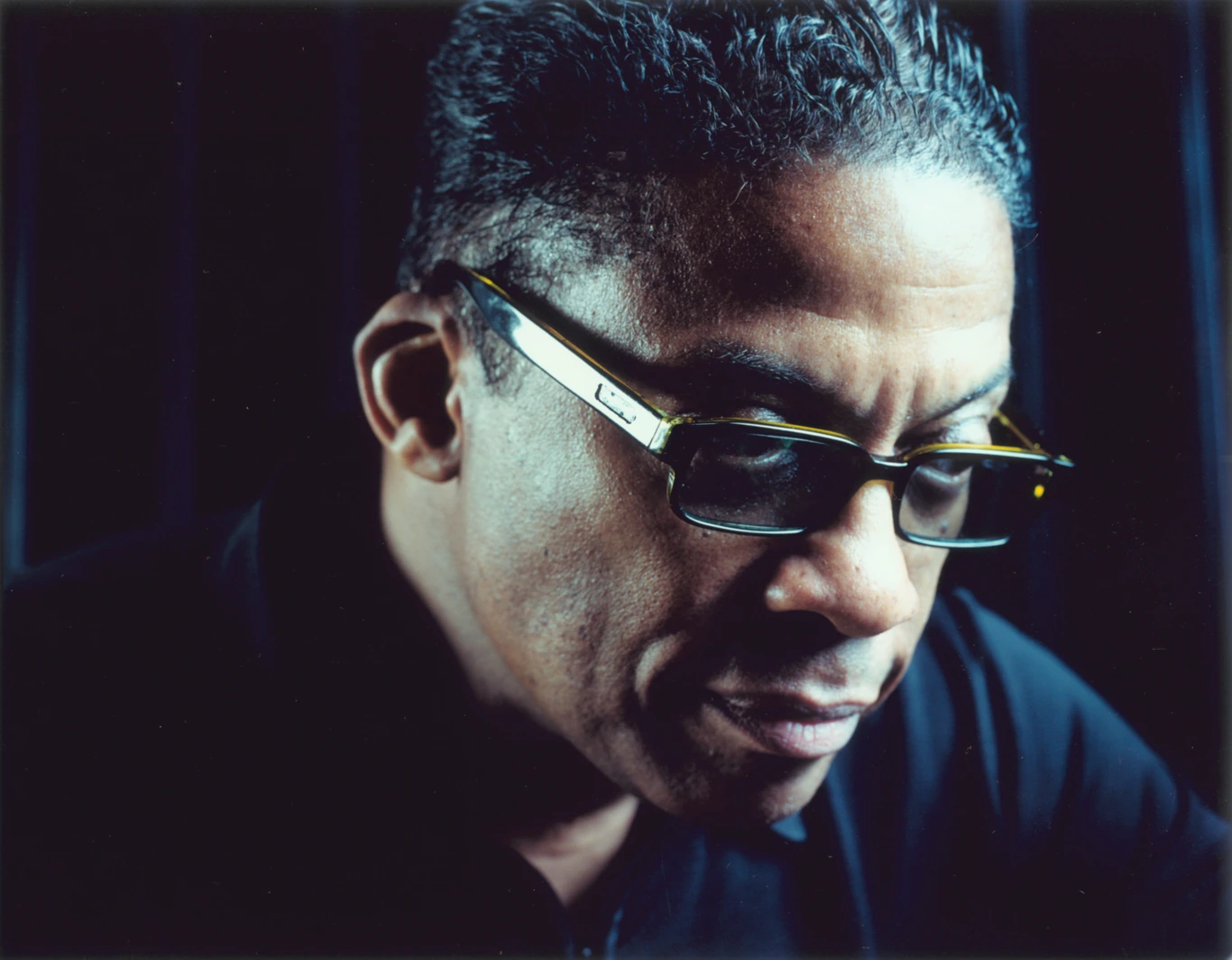
The legendary pianist will perform at Wrocław’s Centennial Hall on 28 November. Herbie Hancock and his band will appear in a concert promoting the latest album, “The Imagine Project”.
Herbie Hancock began piano at seven. Recognised as a musical child prodigy, he performed a Mozart piano concerto with the Chicago Symphony Orchestra at 11. At 20, trumpeter Donald Byrd noticed him and invited him into his band. In 1962, Hancock recorded his debut, Takin’ Off, featuring his first hit, Watermelon Man. The following year, Miles Davis invited him to join his quintet.
Together with Ron Carter on double bass and Tony Williams on drums, he formed modern jazz’s most famous rhythm section there. Alongside working in Davis’s band, Hancock recorded as a leader for Blue Note during the 1960s, with Empyrean Isles (1964), Maiden Voyage (1965) and Speak Like a Child (1968) considered the most important. In 1968, he left Davis’s group to pursue his own musical explorations, developing the emerging fusion style. Among the results was the bestselling Head Hunters, recorded for Columbia Records in 1973.

In the early 1970s, he was among the first to introduce electronic keyboards. Later, Hancock also successfully incorporated elements of rap and techno, as demonstrated by his 1983 album Future Shock. It included Rockit, which became one of the hits of the newly established MTV. Around the same time, Hancock was also pursuing a project called V.S.O.P., an attempt to revisit the sound of Davis’s purely jazz quintet of the 1960s. He was joined by his former bandmates, with Freddie Hubbard replacing Davis on trumpet. His latest major successes have included Gershwin’s World (1998), Directions in Music: Jazz at Massey Hall (2002) and River: The Joni Letters (2007), all of which earned him Grammy Awards.
Herbie Hancock has won twelve Grammy Awards and an Oscar for the music to the 1986 film Round Midnight. Many of his compositions have become standards: alongside the previously mentioned Watermelon Man, these include Cantaloupe Island, made famous by US3’s remix, Maiden Voyage, Eye of the Hurricane, Dolphin Dance and Chameleon. Together with McCoy Tyner, Keith Jarrett and Chick Corea, he is also regarded as one of the four great pianists of later modern jazz who have had the greatest influence on the way the instrument is played. His rhythmic invention and improvisation are particularly admired[2]. For more than thirty years, he has created both purely jazz music and work influenced to varying degrees by pop, rap and techno, moving with equal ease through all these genres.
Herbie Hancock’s band will perform in Wrocław with the following line-up:
Herbie Hancock – piano
James Genus – bass
Trevor Lawrence Jr. – drums
Lionel Loueke – guitar
Greg Phillinganes – keyboards
Kristina Train – vocals
Event details
Herbie Hancock
27 November 2010
Centennial Hall
Wrocław